EDHEC Student Dataviz Challenge


Interactive Dashboard : UNICEF - Education & Beyond


Purpose and Inspiration

Education has always been a passion of mine, driven by a belief in its transformative power for individuals and societies alike. Inspired by the need to understand and visualize global education trends, I embarked on a journey to create a comprehensive dashboard that would illuminate key insights and disparities in education access, quality, and equity worldwide.


According to UNICEF, 600 million children and adolescents worldwide are unable to attain minimum proficiency levels in reading and mathematics, even though two-thirds of them are in school. Growing up in India, I noticed that disadvantaged students lacked access to sanitary conditions and basic amenities, sparking my interest in understanding how poverty, sanitation, and access to water affect educational outcomes.


Dashboard Features

My dashboard offers a user-friendly interface designed to empower stakeholders to explore and analyze education data effortlessly. It includes interactive elements such as filters, dynamic charts, and custom visualizations that allow users to delve deep into the data with ease. Whether examining enrollment rates, educational expenditures, or gender disparities in education, the dashboard provides a clear and insightful view of complex educational landscapes.


This dashboard can give you a deep dive into the factors affecting education at different levels through various indicators. For example, if the “out of school” indicator is lower for a country, one could investigate factors such as the “rate of child labor” to understand the underlying reasons.

Data Sources

To ensure accuracy and reliability, I sourced data from reputable international organizations and databases dedicated to education statistics. These include UNESCO, World Bank, and national education ministries, among others. By leveraging these robust datasets, I aimed to provide users with a comprehensive and credible resource for understanding global education trends.

Key Insights

Through my dashboard, several compelling insights have emerged. For instance, visualizations have highlighted significant disparities in educational access between urban and rural areas in developing countries. Additionally, trends in educational expenditure have underscored the importance of adequate funding for improving educational outcomes. These insights not only inform but also inspire action towards fostering inclusive and equitable education systems globally.


Usually, the “out of school rate” increases exponentially as we move from lower secondary level to secondary level. This is typically observed in most countries due to high rates of indicators such as “physical punishment” at lower secondary levels. Ensuring a secure and healthy upbringing is crucial for achieving a good pass-out rate for every child.


In the majority of countries with low attendance rates, the percentage of schools with no drinking water is very high. This proves that without a good infrastructure of the school or country, a child cannot concentrate on studies and achieve the same results. The environment in which a child attains education needs to be extremely conducive.


The poverty dashboard gives an overview of the poverty state and the percentage of children living below the National Poverty Line in each country. These indicators are crucial because poverty affects the level of “affordability.” Countries with low attendance rates often have a higher percentage of children living in households below the National Poverty Line.

User Experience

Central to the dashboard's design was prioritizing user experience. I focused on intuitive navigation and interactive features to ensure that users, regardless of their technical expertise, could explore and understand the data effectively. By incorporating user feedback and iterative design processes, I aimed to create a tool that enhances accessibility and usability for diverse stakeholders in the education sector.


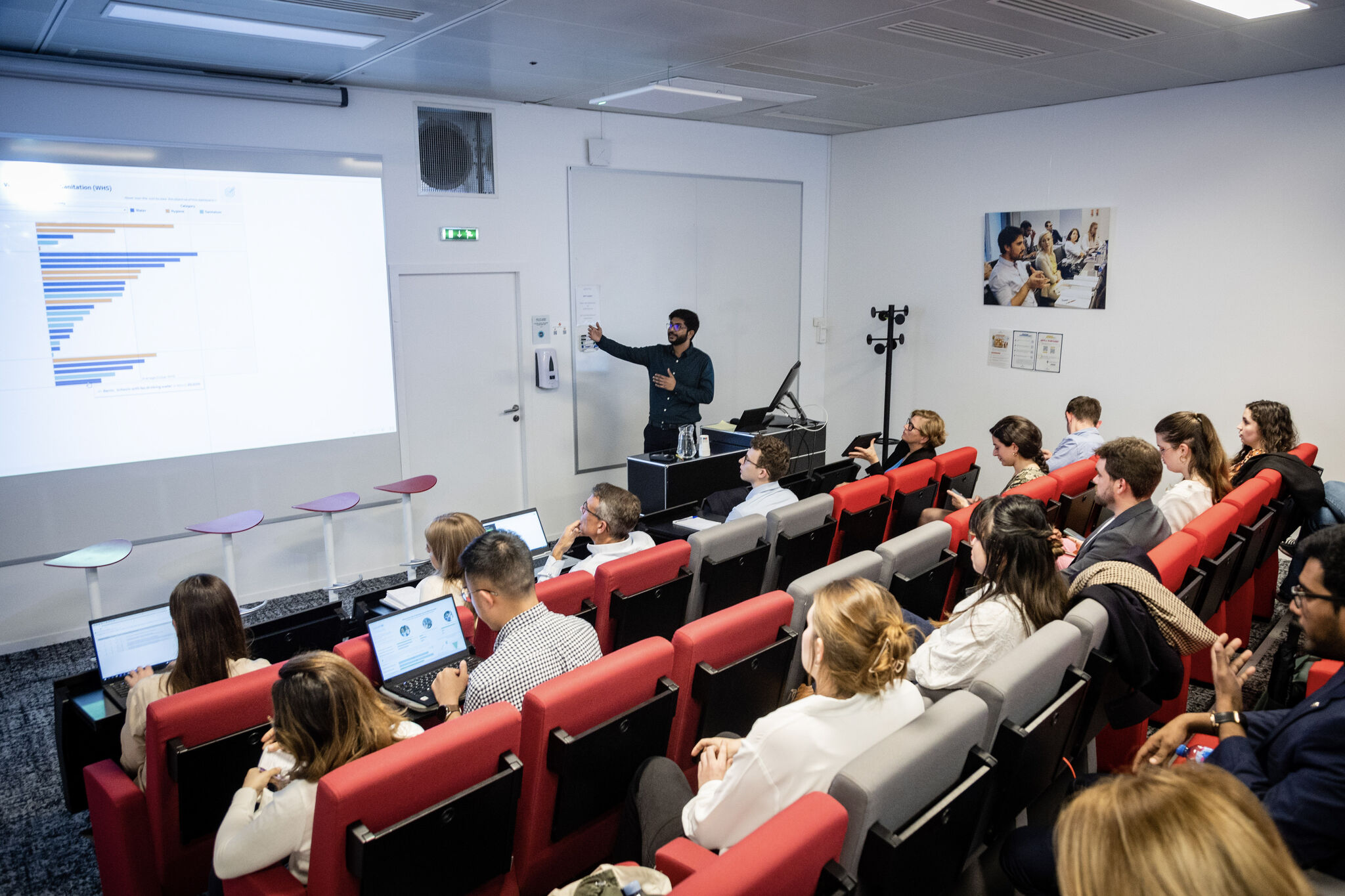
The dashboard gives an overview of the 3 most basic human needs: water, hygiene, and sanitation. The significance of this dashboard is to understand how the quality of education is correlated with either water, hygiene, or sanitation

Impact and Future Directions

It has been instrumental in informing strategic decisions and initiatives aimed at improving education outcomes worldwide. Looking ahead, the dashboard's capabilities can be expanded by incorporating additional datasets and features to further enhance its utility and relevance in addressing emerging educational challenges.


For instance, by examining the gap in youth literacy rates between males and females, we can identify areas where interventions are needed to ensure that all children, regardless of gender, have access to quality education. In general, a smaller gap indicates more gender equality in education opportunities, while a larger gap suggests that females may face cultural, social, or economic barriers to accessing education.

Technical Skills Demonstrated

Creating this dashboard required proficiency in data visualization tools such as Tableau, as well as expertise in data cleaning, analysis, and interpretation. By applying these technical skills, I was able to transform raw data into actionable insights that drive informed decision-making and advocacy in the field of education.

Challenges and Learnings

Throughout the development process, I encountered various challenges, from data integration complexities to ensuring visual clarity and interpretability. However, each challenge presented an opportunity for growth and learning. By refining visualization techniques and adopting best practices in data storytelling, I enhanced the dashboard's effectiveness and impact.


In conclusion, the journey of creating this dashboard has reinforced my commitment to leveraging data-driven insights for social impact, particularly in advancing educational opportunities for all.
Every child deserves equal opportunities and has the right to a similar education. Factors such as water, health, infrastructure, poverty, and child labor significantly impact education. For a nation to progress and achieve its educational goals, a holistic approach to development is essential.